Sunrise in Mesa, Az the first few days of September will be around 6:01am and sunset around 6:53pm. As the month progresses, the sun will rise slightly later and set slightly earlier. By September 30 we will see the sunrise around 6:22am and sunset around 6:13pm.
Sunrise early in the month

Sunset early in the month

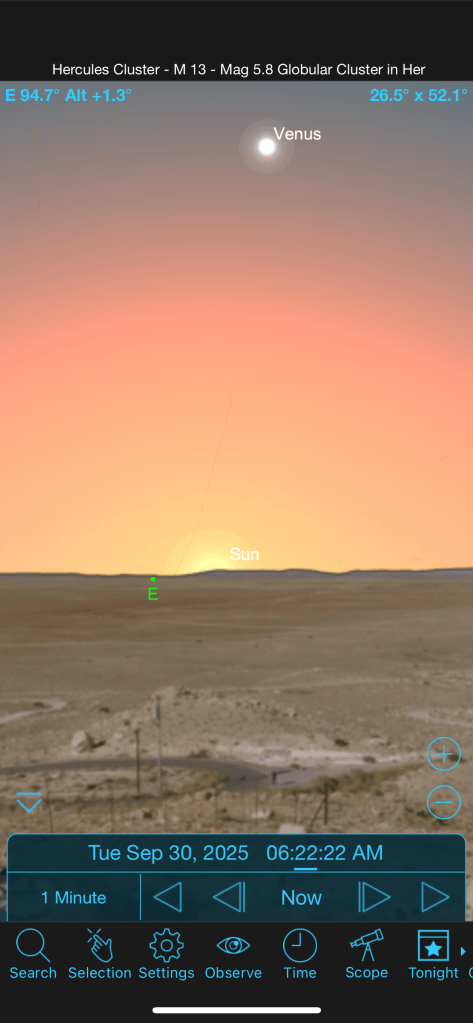
Sunrise late in the month
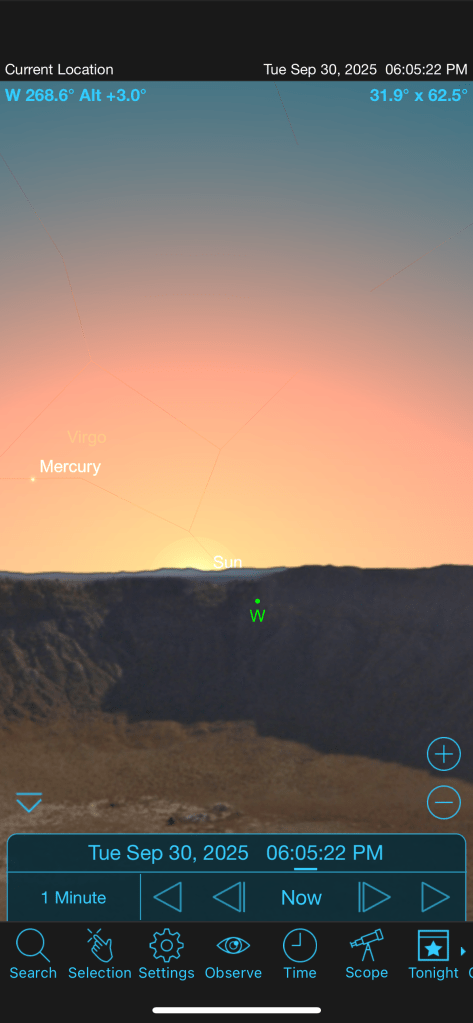
Sunset late in the month
Planets visible
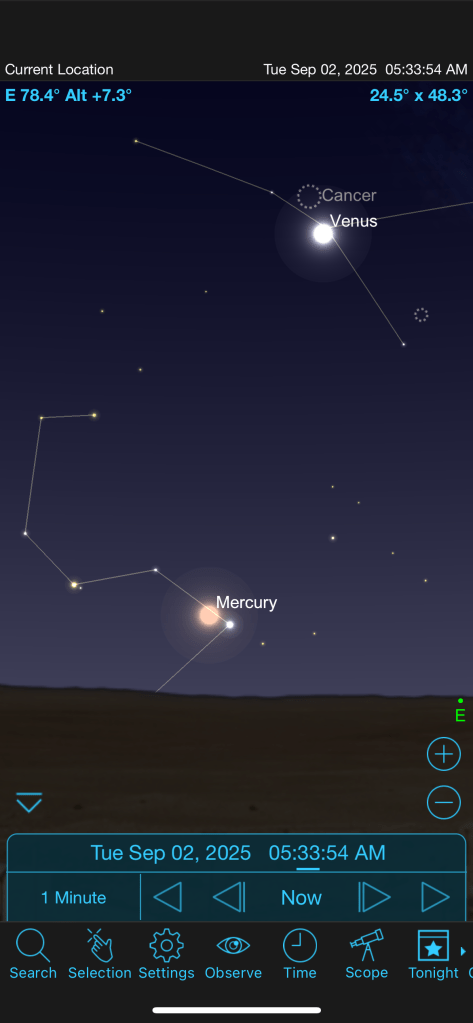
Mercury (mag -1.3 to -0.5): will have a short morning visibility from September 1 to about 9. You’ll will need to look for it shortly before sunrise in the east northeast sky. On September 2, watch Mercury pass very close to the star Regulus in the constellation Leo. By September 10, Mercury will be lost in the sun glare.
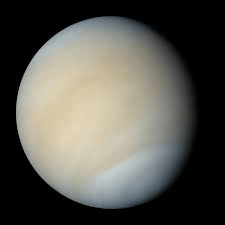
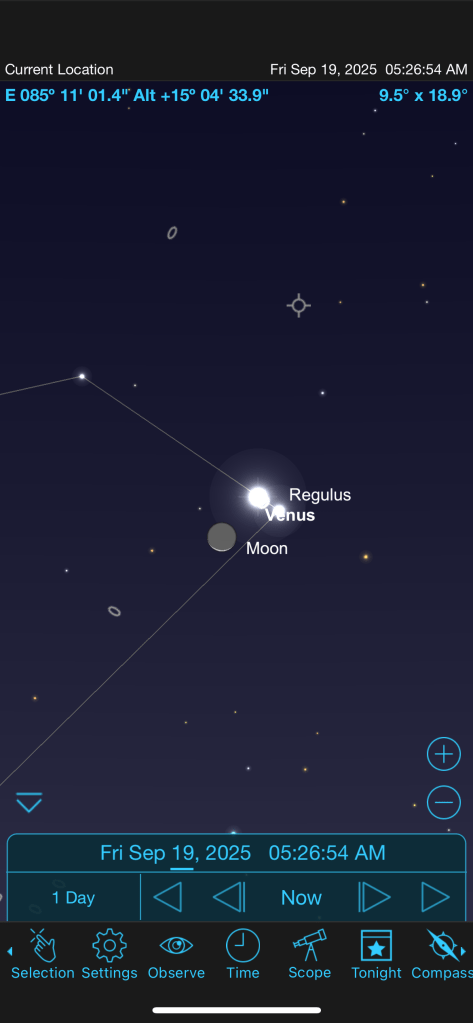
Venus (mag -4.0 ): still visible in the morning as a bright prominent star in the eastern sky before sunrise. On September 19, there will be a close pairing with the Moon and Regulus. The Moon, Venus, and Regulus should all be visible within the same field of view of binoculars.

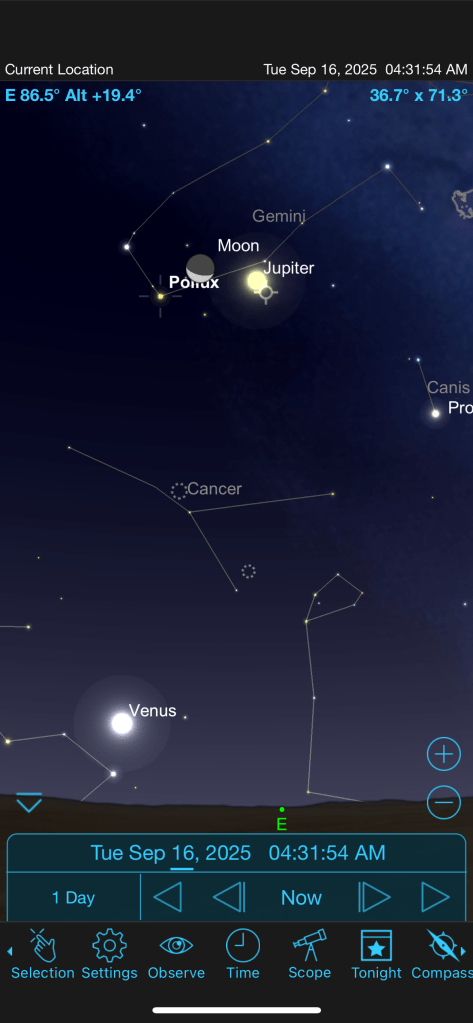
Jupiter (mag -2.0 to -2.1): continues to climb higher in the morning sky as it pull away from Venus after it close pass on August 12. It will be visible pretty high up in the eastern sky before sunset in the constellation Gemini. Jupiter rises around 2am early in September to just after midnight by the end of the month. On Sept 16, there will be a close pairing between the Moon, Jupiter, and the twin stars of Castor and Pollux.
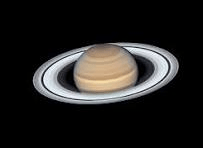
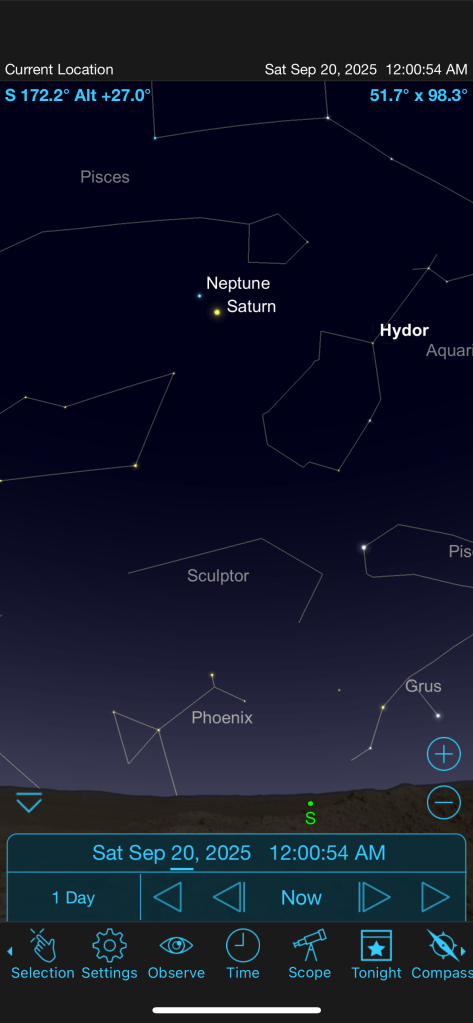
Saturn (mag 0.7): will be visible at night as it reaches its brightest and closest point to Earth on Sept 20. It will be visible most of the night being its highest in the sky at midnight. During this opposition Saturn will be at it brightest of the year shining at 0.6. This will be the best time to view its rings through a telescope. It remains near the planet Neptune in the constellation Pisces. A bright full moon will pass by it between Sept 8 and 9.


Mars (mag 1.6): visible very low in the west southwest sky after sunset. There only a short window to view Mars as it will set by 8:30pm and earlier and earlier as the month goes though the sun will also be setting earlier. Mars will be situated in the constellation Virgo and near the bright star Spica passing close by on the 13.

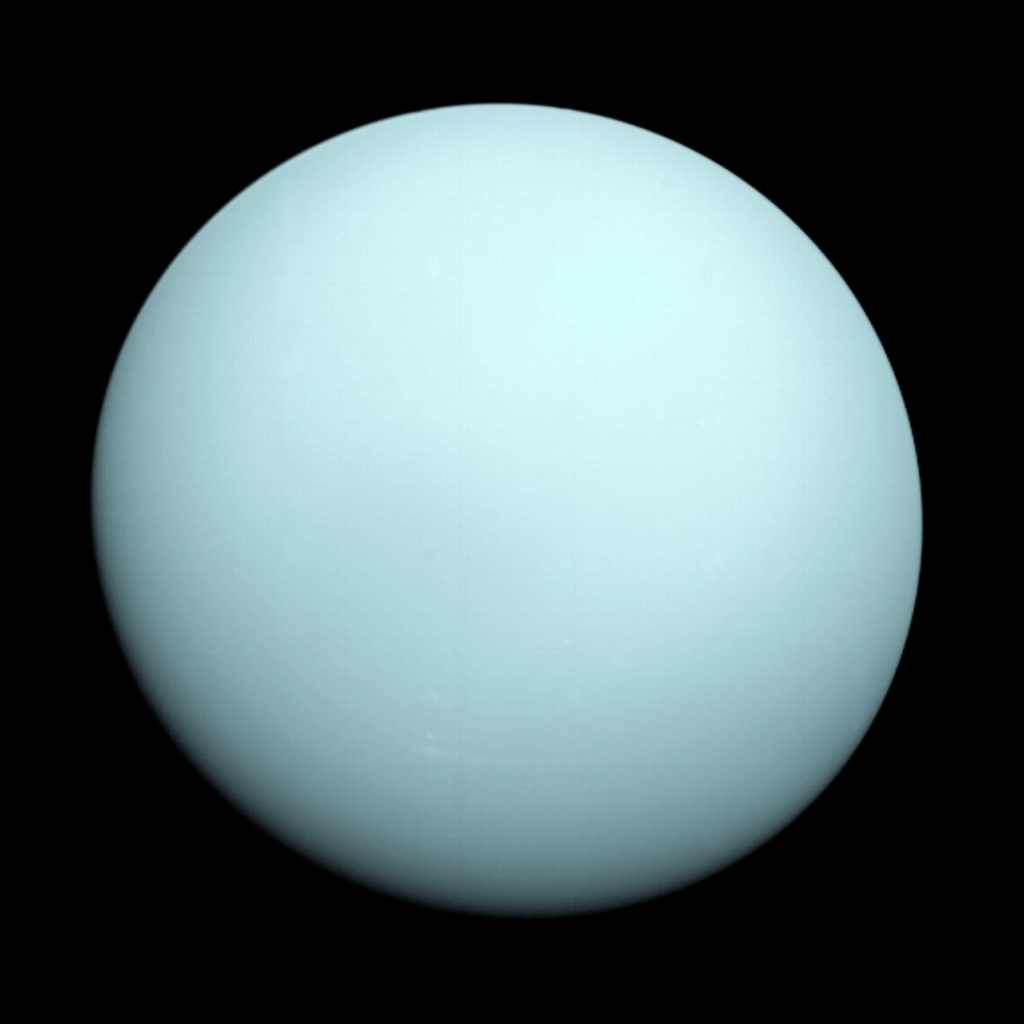
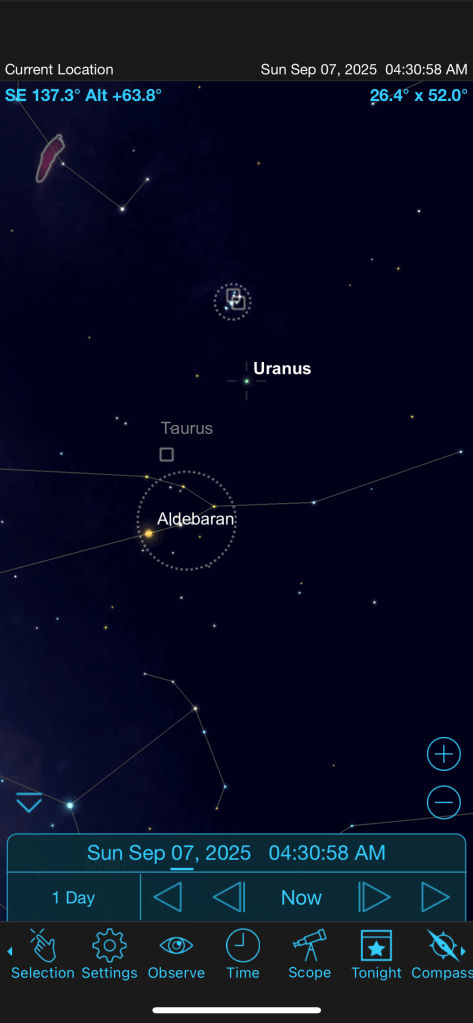
Uranus (mag 5.7): will be visible high up in the east southeast sky before sunrise. Its currently located in the constellation Taurus and will be situated between the Pleiades and the Hyades. The moon will pass near it on Sept 12-13. Uranus will be faint so you’ll need binoculars or a small telescope to see it.
Neptune (mag 7.8): will be visible all night alongside Saturn. It rises in the east just before 8pm and will be high up in the southeast around midnight. On around Sept 23 it will be at opposition when it will be closest to Earth and at its brightest. However, it will still be faint requiring binoculars and a telescope to see it. Even after opposition, Neptune will remain visible in the evening until February 2026.

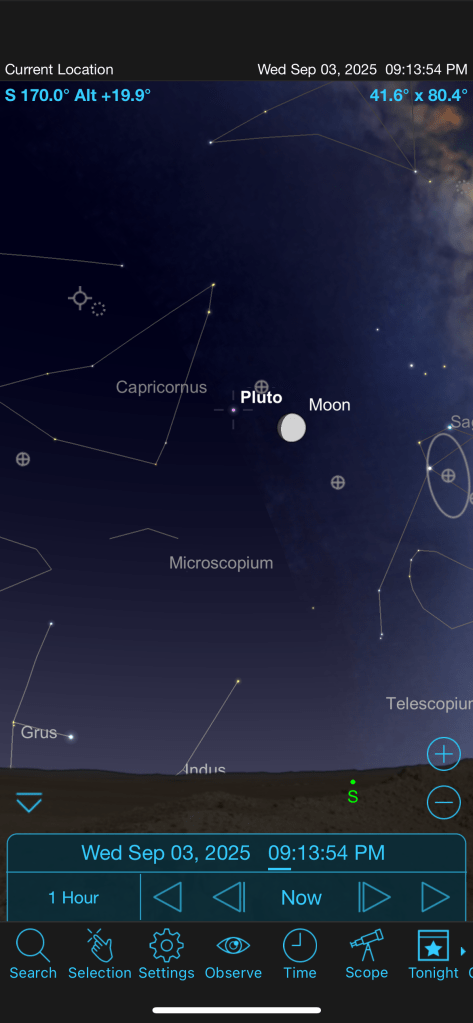
Pluto (14.4): will unnoticeable be position relatively high in the south during the evening and late night . On Sept 3, the moon will be near by the almost invisible planet.
Bright Galaxies and Nebulas visible
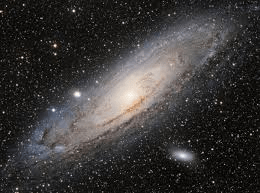
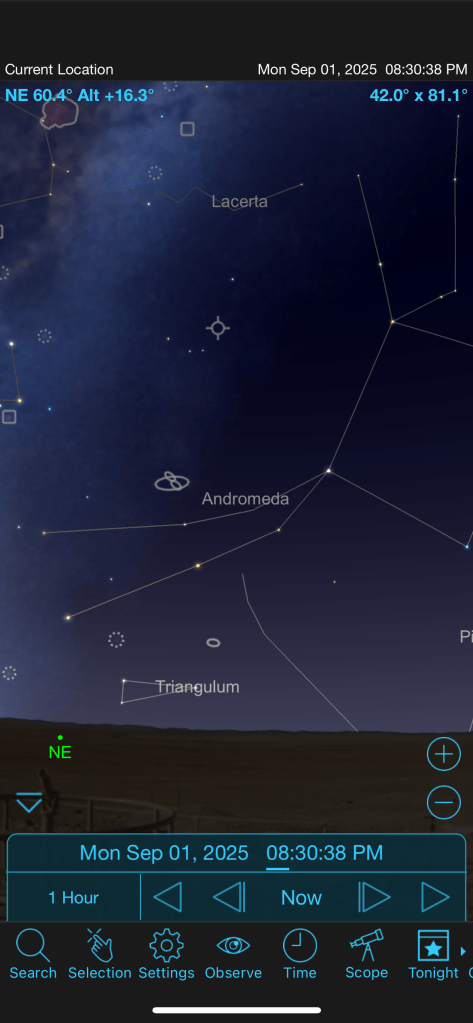
The Andromeda Galaxy (M31): best time to view this month. Look towards the eastern sky in mid-evening to see it already well place in the northeast sky. Though at mag 3.3 a naked eye object it is better to seen with a pair a binoculars. You can find it by using the upper part of the “W” shape of the constellation Cassiopeia as a pointer to Andromeda.
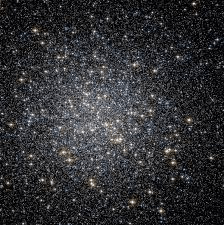
Hercules Cluster (M13): this globular cluster at mag 5.8 is one of the brightest star clusters visible here in the Northern Hemisphere and is easily spotted through binoculars or a telescope. It will be high up in the sky at sunset and doesn’t set until after midnight especially early in the month. As the month goes on it will set earlier and earlier.
Bright Stars
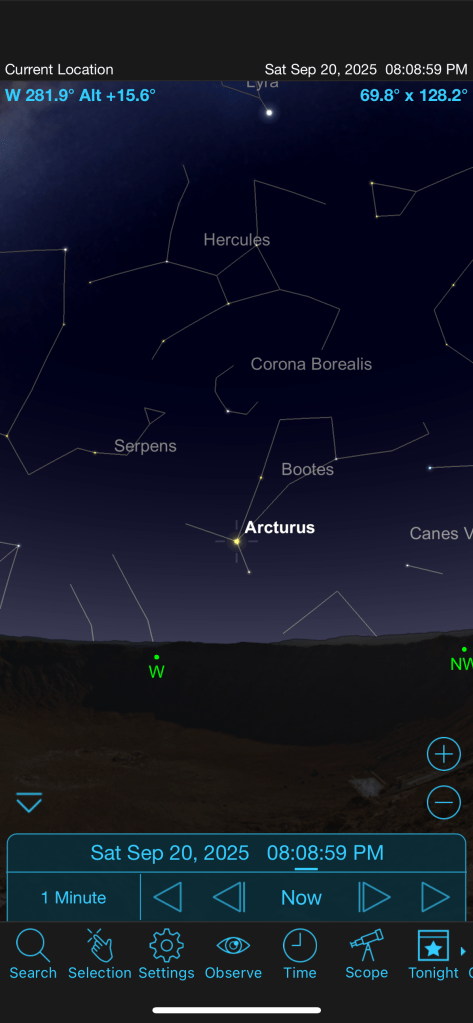
Arcturus(mag 0.2): bright orange looking star, located in the constellation Boötes. It will be visible after sunset low in the western sky. In the beginning of the month its sets around 10pm but as the month goes up it will set earlier and earlier.
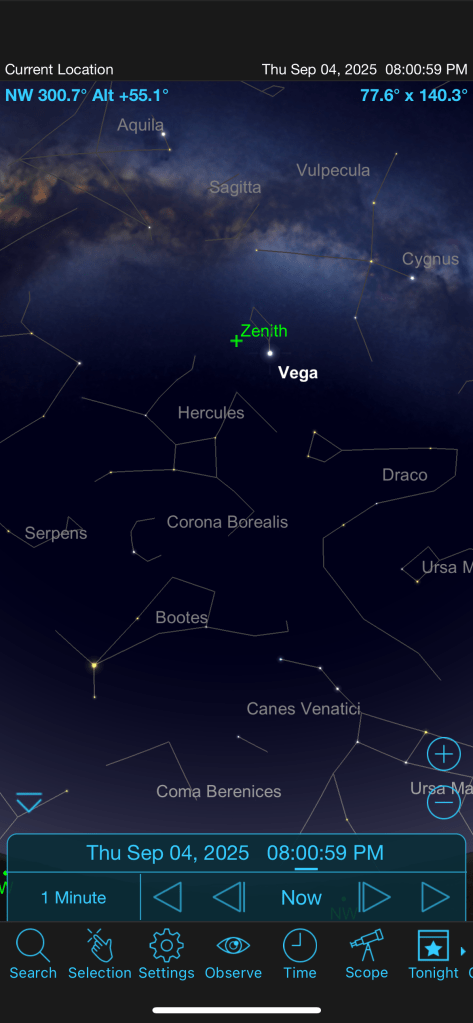
Vega(mag 0.0) bright white star located in the constellation Lyra. It will be visible nearly straight up as twilight fades away and out all night until around 3am.
Spica:(mag 1.0) bright blueish star located in the constellation Virgo. It will briefly be visible early in the month after sunset low in the west. By mid-month it will sink below the horizon and be lost in the sun glare.
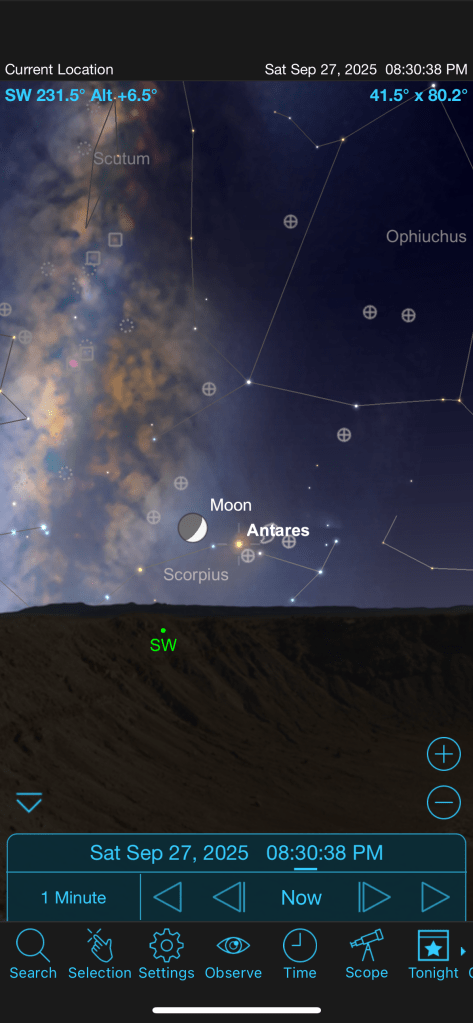
Antares(mag 1.07) bright orange-red star, located in the constellation Scorpius. It will be visible low in the southwest after sunset and sets below the horizon around 9pm. On Sept 27, it will be very close to the the waxing crescent Moon.
Comets
Comet C/2026 A6 Lemmon a newly discovered long period comet that was found on January 3, 2025 will reach it closest approach to Earth on October 21, 2025 at a distance of about 0.596 AU and its closest approach to the Sun on November 8, 2025. Some estimates suggest it will peak in brightness around magnitude 4 or 5.
It should be visible in the early morning sky in September for Arizona in the constellation Gemini rising in the east before dawn. The comet will be located between the twin stars Castor and Pollux.
Although it will not be visible to the naked eye in September it is brightening faster than expected. Expect the brightness to be around 10 or 11. It will be a good target for small telescopes and binoculars
It will eventually shift toward the evening sky in October, becoming a target for observers looking to the west after sunset.
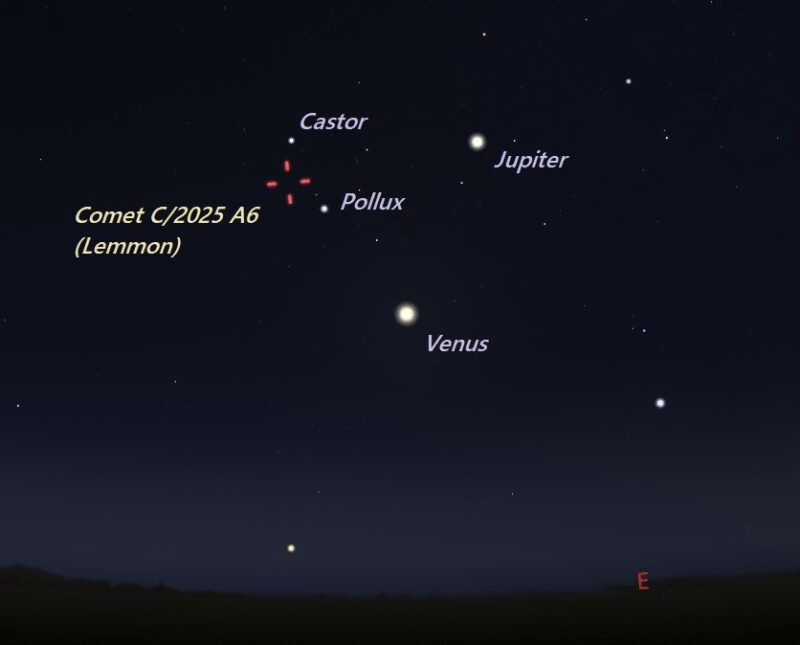
Finder chart for Comet C/2025 A6 Lemmon on August 23, 2025. Image via Eddie Irizarry/ Stellarium.
Meteor Showers
E-Perseid – will be active from Sept 5 to the 21 peaking around the 9. It radiant is located in the constellation Perseus. The shower is likely to produce is best display before dawn on Sept 9. It only has a peak of 5 meteors per hour. Also the moon will be in Pisces and only 3 days past full at the shower peak causing a lot of light interference.
Moon Phases
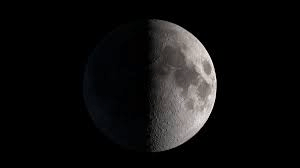
First Quarter: September 1
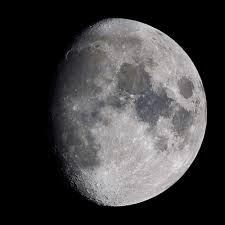
Waxing Gibbous: September 2-7
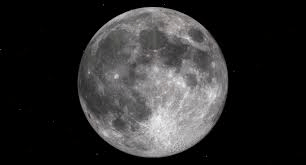
Full Moon: September 8
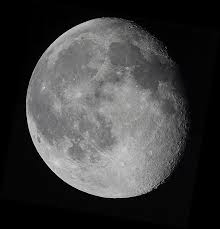
Waning Gibbous: September 9-13
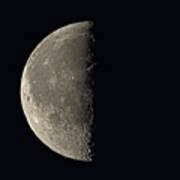
Last Quarter: September 14-16

Waning Crescent: September 17-21

New Moon: September 22
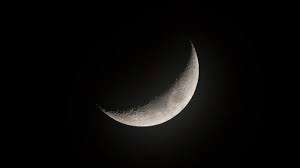
Waxing Crescent: September 23-29
First Quarter: September 30
Moon Occults the star Beta Tau
On the morning of September 14 the last quarter Moon will block the bright star Elnath Beta Tau(mag 1.6). This event will be seen in Mesa, Arizona between 4:36am-5:12am pretty high in the east southeast sky.

Catch the last chances to see Titan’s shadow glide across Saturn!
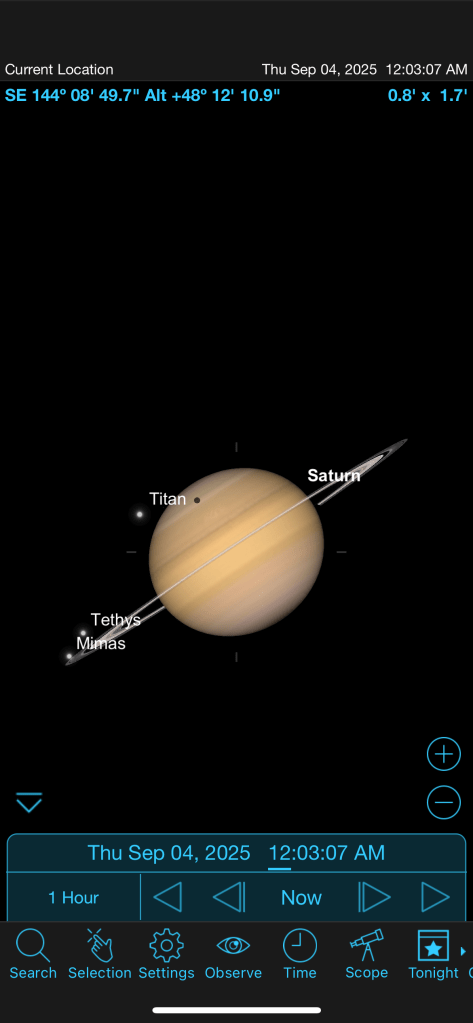

 AstroJoe Arizona Monthly Sky Tour
Leave a comment