Sunrise in Mesa, Az the first few days of August will be around 6:10am and sunset around 7:35pm. As the month progresses, the sun will rise slightly later and set slightly earlier. The last few days of August we will see the sunrise around 6:20am and sunset around 7:20pm.
Planets visible
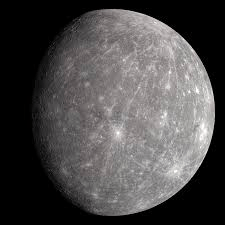
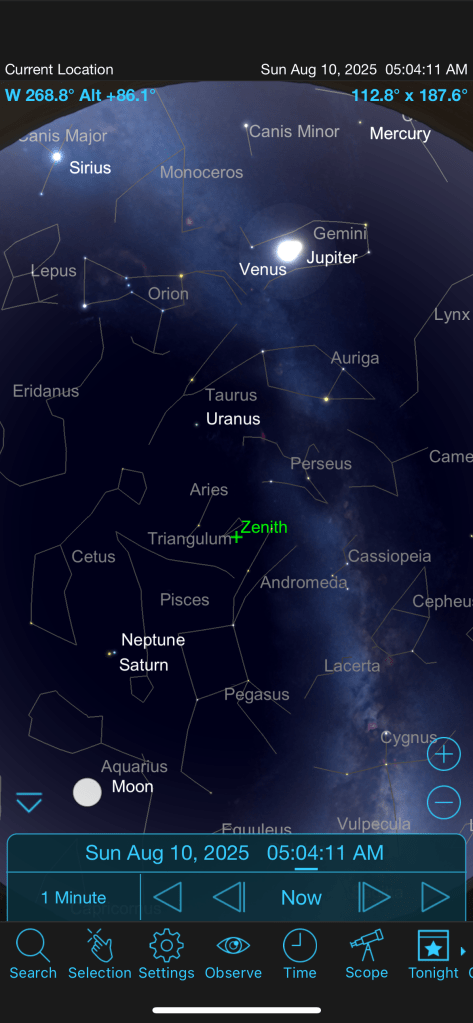
Mercury (mag 3.0 to -1.2): will be visible in the morning sky especially between August 15 -29. The best time to see it will be on August 19, when it reaches its greatest elongation from the sun in the sky. On the morning of August 10, a rare planetary alignment will be seen low in the eastern sky an hour before sunrise, It will feature Mercury, Venus, Jupiter, and Saturn. It will also include Uranus and Neptune though they wouldn’t be visible by the naked eye.
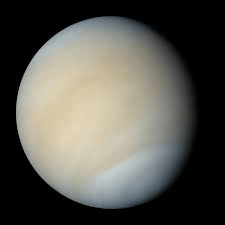
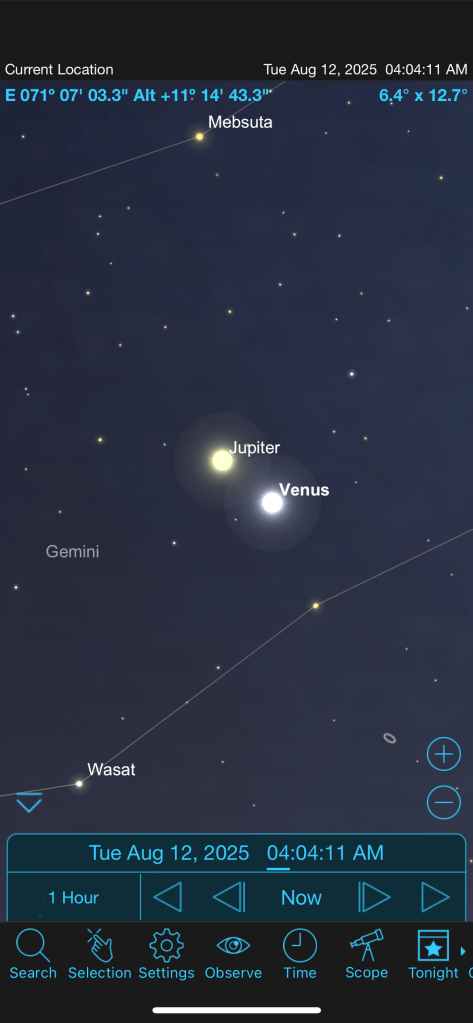
Venus (mag -4.0 ): continues to be the bright morning star in the east but it is starting to rise later and later each morning. It is part of the 6 planetary alignment on August 10. On August 12 Venus will be close to Jupiter forming a bright pair in the eastern dawn sky. The moon will be nearby on August 15.

Jupiter (mag -1.9 to -2.0): will be visible in the morning sky low in the east about an hour before sunrise. Starting from Aug 6-18, Jupiter and Venus will be very close together, appearing within the same binocular field of view with the closest being on Aug 12.
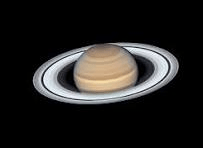
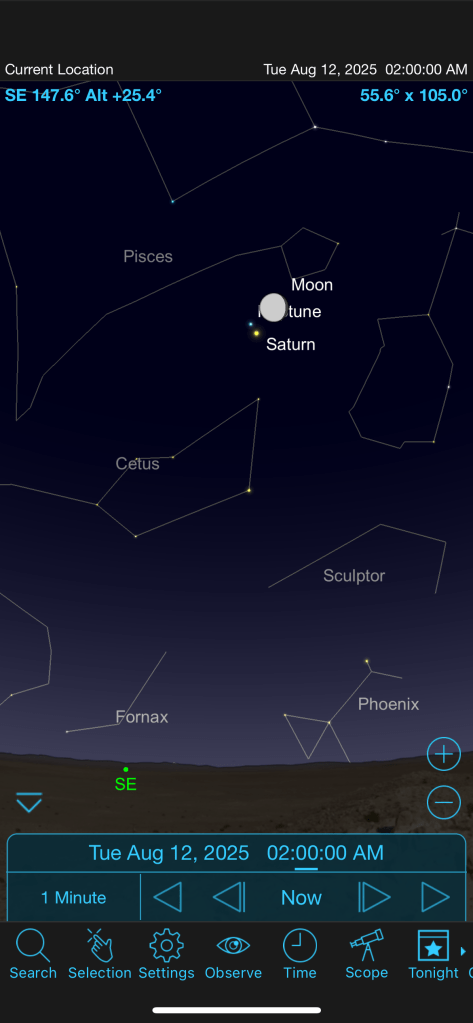
Saturn (mag 0.8 to 0. 7): will be visible in the late night sky in August, rising in the east at midnight and remaining visible all the way til sunrise. It will also be part of the 6 planetary alignment on the morning of Aug 10. The waning gibbous moon will be near on the 12.

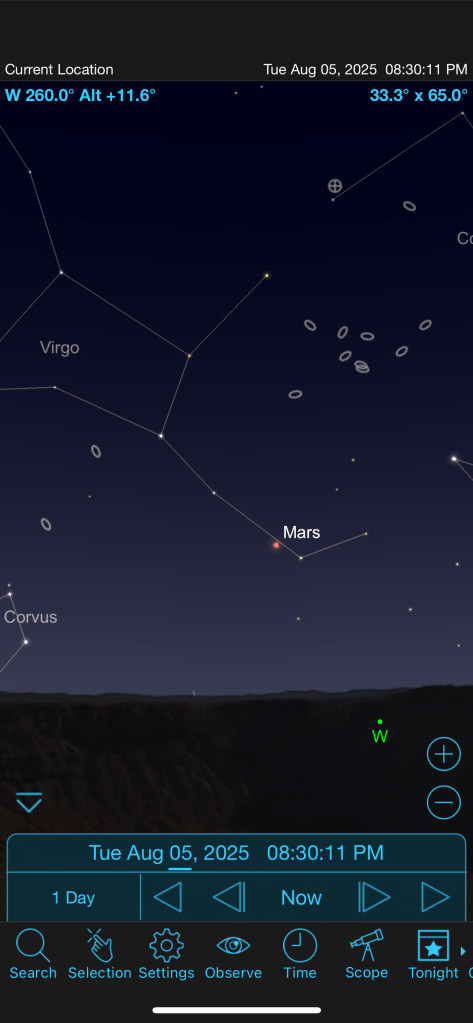
Mars (mag 1.5 to 1.6): will still be visible low in the west in the evening sky early in the month from about an hour after sunset to around 9:30pm. By late August Mars will be moving further away from Earth and will be lost in the glare of the Sun. It currently situated in the constellation Virgo.
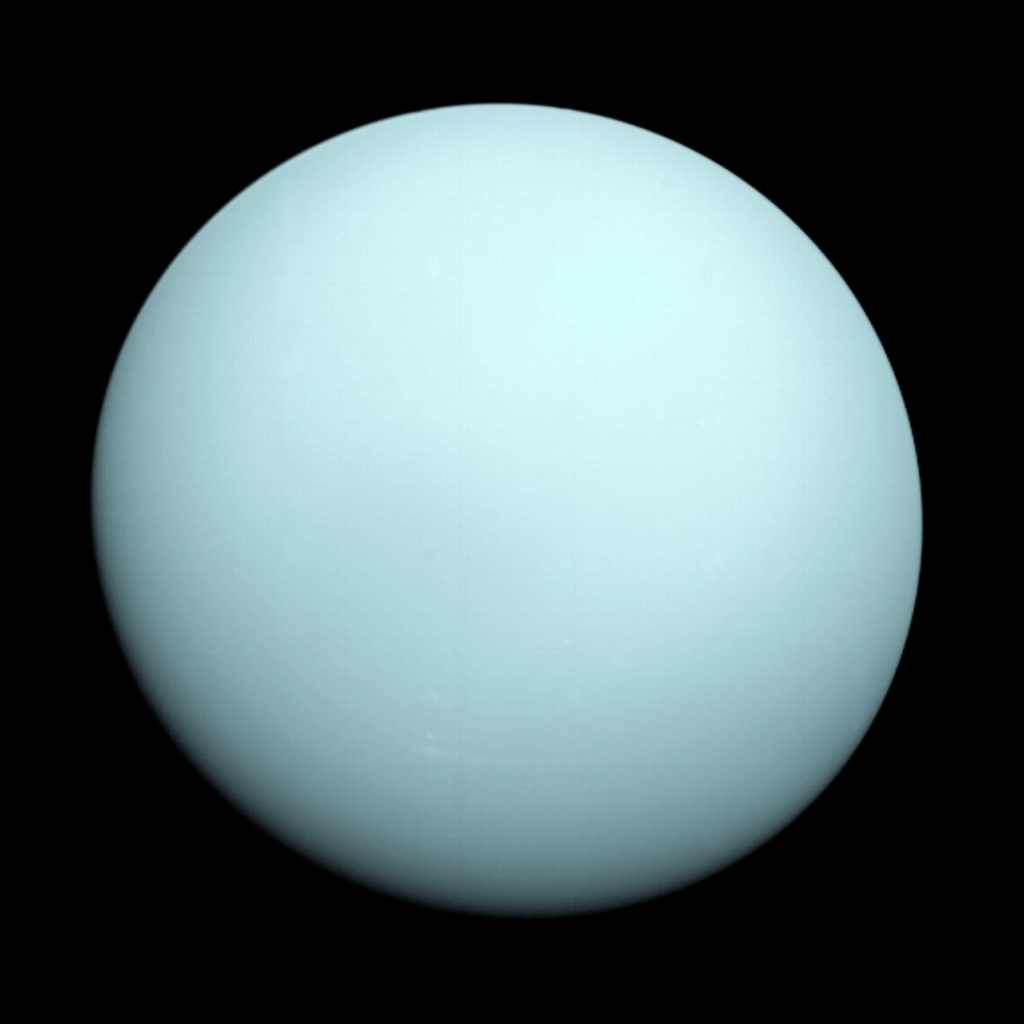
Uranus (mag 5.8). It will be visible in the morning sky particularly around August 10 planetary alignment of six planets. Look low on the eastern horizon and about an hour before sunrise. Uranus will be faint so you’ll need binoculars or a small telescope to see it.
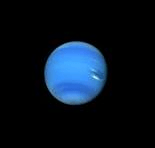
Neptune (mag 7.9): will be part of the 6 planet alignment on August 10. It is still pretty close to Saturn which will help you find it with binoculars or telescope.

Pluto (14.4): rises around sunset and is technically well place in the south by 11pm . But its pretty much invisible to see for most amateur astronomers.
Bright Galaxies and Nebulas visible
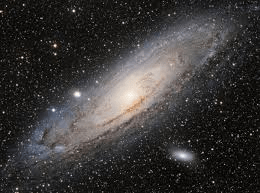
The Andromeda Galaxy (M31): rises just after sunset and is up all night high in the east. Though at mag 3.3 a naked eye object it is better to seen with a pair a binoculars. You can find it by using the upper part of the “W” shape of the constellation Cassiopeia as a pointer to Andromeda.
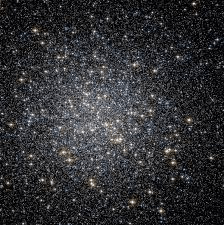
Hercules Cluster (M13): this globular cluster at mag 5.8 is one of the brightest star clusters visible here in the Northern Hemisphere and is easily spotted through binoculars or a telescope. It is almost straight up in the sky at sunset and doesn’t set until around 4am. As the month goes on it will set earlier and earlier.
Bright Stars
Arcturus(mag 0.2): bright orange looking star, located in the constellation Boötes. Early in the month it is well place in the west after sunset and sets just after midnight. As the month goes by it will gradually sink lower and lower.
Vega(mag 0.0) bright white star located in the constellation Lyra. Already high up in the northern sky at sunset it out all night until just before 4:30am.
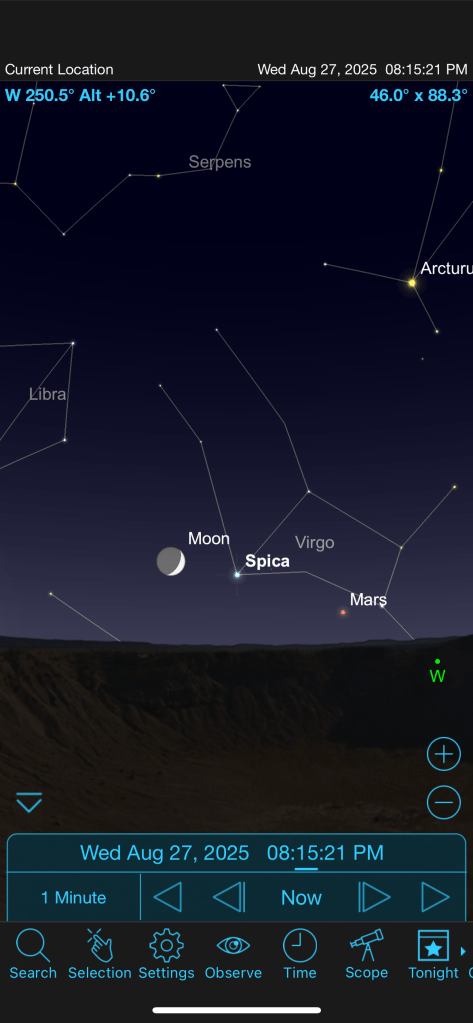
Spica:(mag 1.0) bright blueish star located in the constellation Virgo. It will be visible low in the west after sunset in the beginning of the month. As the month goes on it will gradually sink toward the horizon. It will be close to the waxing crescent moon on August 26 and 27.
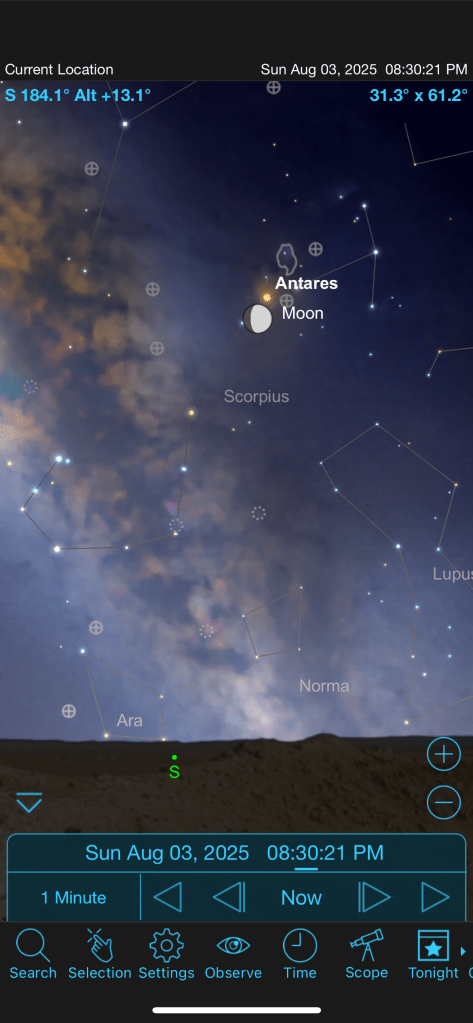
Antares(mag 1.07) bright orange-red star, located in the constellation Scorpius. It will be well place in the south at sunset and sets below the southwest horizon after midnight. On August 3, it will be very close to the the waxing gibbous Moon.
Meteor Showers
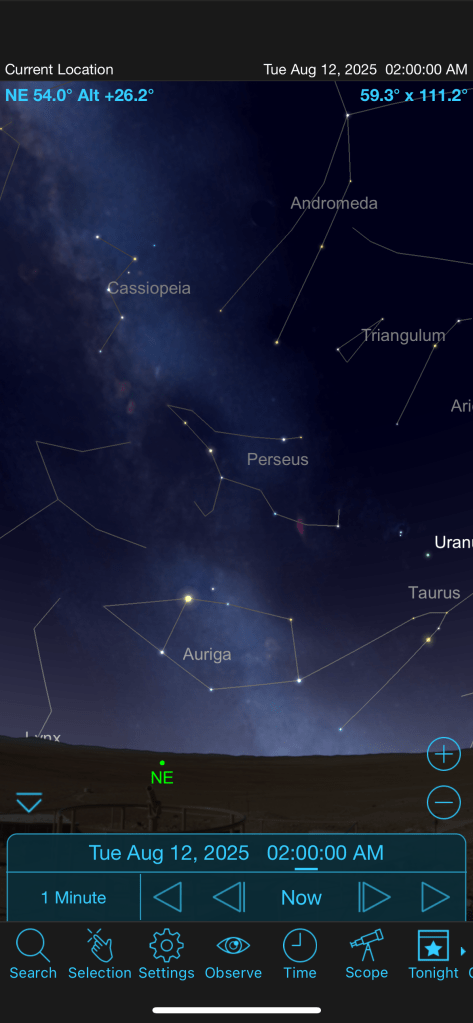
Perseids: The biggest most famous meteor shower will peak on the night of August 12 into the early morning of August 13. The radiant point is in the constellation Perseus, which will be high in the northeastern sky after midnight. Under ideal conditions, up to 100 meteors per hour can be visible during the peak. However this year a waning gibbous moon will be 84% illuminated during the peak, which will impact viewing conditions, but some meteors should still be visible.
Moon Phases
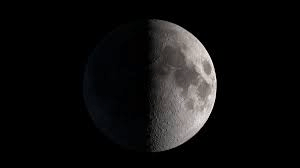
First Quarter: August 1
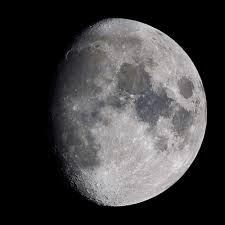
Waxing Gibbous: August 2-7
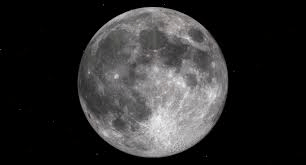
Full Moon: August 8-9
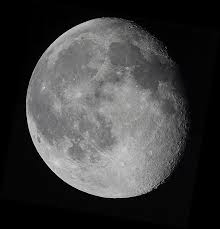
Waning Gibbous: August 10-15
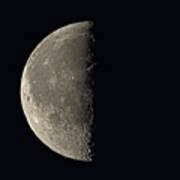
Last Quarter: August 16

Waning Crescent: August 18-22

New Moon: August 23
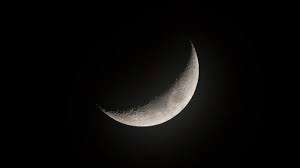
Waxing Crescent: August 25-30
 AstroJoe Arizona Monthly Sky Tour
Leave a comment